

U.S. Plains Livestock Stress Headed For Dangerous Category
By Drew Lerner
Kansas City, June 13 (World Weather Inc.) – The season’s first excessive heat in the Plains occurred during the early part of the weekend when parts of South Dakota and immediate neighboring areas breached 100 degrees Fahrenheit. The heat has temporarily abated, but it will be returning and this time it will likely promote extreme temperatures over a larger part of the central and southwestern Plains raising the potential for livestock stress. Animal stress will be in the danger category for a few days late this week and into the weekend. World Weather, Inc, is concerned that the heat will be just the beginning of a long summer of animal stress from Nebraska to Texas and more infrequently from western Iowa to Louisiana.
High temperatures most of this workweek will be in the 80s and 90s Fahrenheit across the central and southwestern Plains where a large portion of the nation’s beef cattle is raised. The warm to hot temperatures will be accompanied by low relative humidity in the afternoons and that should help 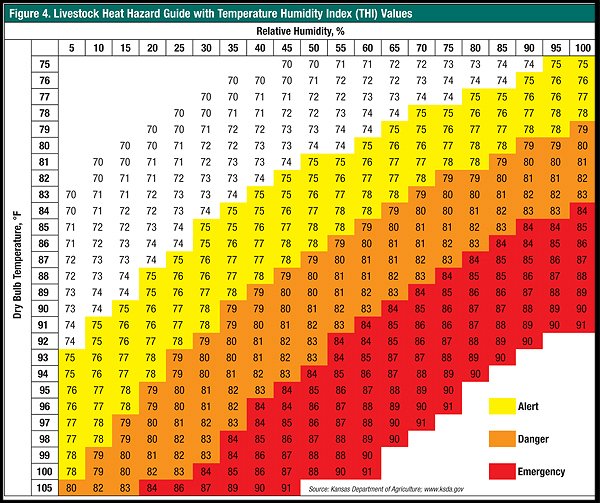 keep the livestock health index away from extreme categories, but only for a while.
A building ridge of high pressure expected over the central and southern Plains late this week and into the weekend will induce hotter temperatures. Extreme highs in the 90s to 106 degrees Fahrenheit will be possible and that will occur with low humidity in the afternoons, as well. However, the extra 5 to 10-degrees Fahrenheit of heat will be sufficient to increase animal stress significantly. The Livestock Health Index (LHI) would likely reach through the Danger and Extreme stress categories raising the potential for some animal health issues and raise the potential for death in cases where livestock is not properly cared for.
Dairy production in the southwestern U.S. Plains is expected to decrease over the next few weeks because of the anticipated hotter and more stressful environment that animals will have to endure. Weight gains in beef cattle and hogs throughout the Plains and western Midwest will likely suffer, too, in this environment. A close monitoring of the situation is warranted, especially for July and early August when the hottest and most extreme conditions will be prevalent.
Most of these extreme conditions should not reach the Mississippi River Valley or areas to the east very often. However, relative humidity is always much higher in the eastern U.S. during the summer and when heat impacts those areas it does not have to get as hot as it does in the Plains to cause extreme livestock stress conditions. There is no immediate threat of such extreme conditions in the eastern U.S. in the near term part of the forecast, but a short term bout of hot and humid weather cannot be ruled out a little later in the summer.
World Weather, Inc. forecasts and comments pertaining to present, past and future weather conditions included in this report constitute the corporation’s judgment as of the date of this report and are subject to change without notice. Comments regarding damage or the impact of weather on agricultural and energy as well as comments made regarding the impact of weather on the commodity and financial markets are the explicit opinions of World Weather, Inc. World Weather, Inc. cannot be held responsible for decisions made by users of the Corporation’s information in any business, trade or investment decision.
©2016 World Weather, Inc. Any unauthorized redistribution, duplication or disclosure is prohibited by law and will result in prosecution.