

Western France Will See Minor Relief From Dryness
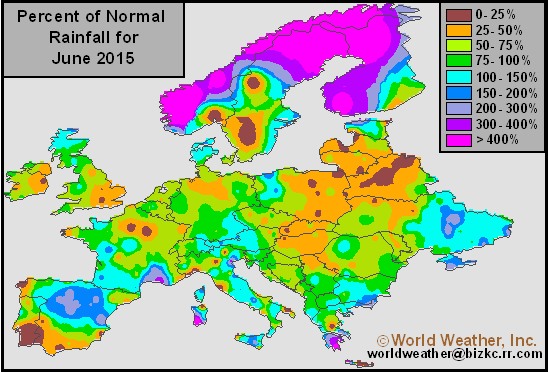
Kansas City, July 1 (World Weather Inc.) – Western Europe trended drier than normal during the past week in most agricultural areas. France, Spain, southern parts of the United Kingdom and Italy saw some of the driest conditions. Portions of western France will see periods of timely rain during the coming week, though much of Western Europe will remain in a drier than normal mode. Net drying will continue to evolve, which could slow crop development rates in many areas and stress some crops as they approach reproduction. The Balkan Countries reported timely rain in many areas during the past week while the Baltic States, Belarus and interior western Ukraine were mostly dry. There will also be little rain in Eastern Europe during the coming week as well.
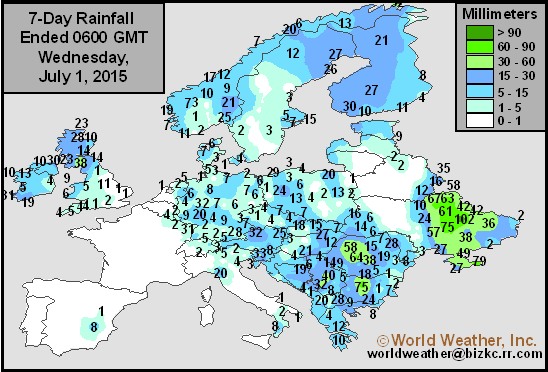
France, Spain, and Italy trended mostly dry during the past week. Southern sections of England also trended mostly dry while the remaining portions of the United Kingdom received 0.15 to 0.90 inch of rain with locally greater amounts for the seven day period ending this morning. Germany and Poland reported up to 0.50 inch of rain in most areas with locally greater amounts. Rainfall was erratically distributed in the Balkan Countries during the past week. Many areas reported 0.50 to 1.50 inches of rain during the past week with local totals ranging from 2.25 to 2.95 inches. Eastern Ukraine reported 1.00 to 3.00 inches most often with locally greater amounts while western Ukraine through the Baltic States was mostly dry.
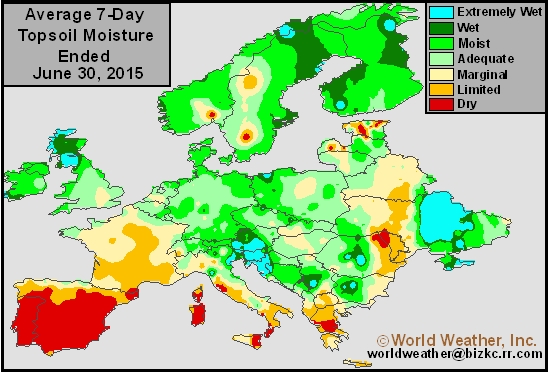
Topsoil moisture in France was rated short to very short due to a lack of rain in recent weeks and very warm temperatures. Italy and Spain have also been drying, which is not as uncommon for this time of year as that in France. Western Ukraine, Belarus, and Greece are also dry and need rain soon to maintain favorable crop development conditions. The remaining production areas in Europe have a mostly adequate amount of moisture in the soil.
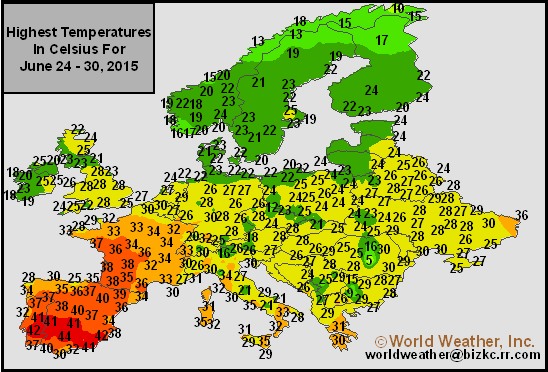
Temperatures have been much warmer than normal in France in recent days. Highs surged into the 90s Fahrenheit with a few pockets that warmed to 100. Drying rates were significantly increased and the topsoil was severely depleted of moisture because of the heat and dryness. Spain was also warm to hot in recent days with extreme highs reaching 111 degrees in the interior south. The remaining portions of Europe experienced temperatures that were close to normal.
Spain’s spring and summer crops are primarily irrigated. The lack of rain in recent weeks has not significantly impacted crop development rates, although the warm weather may have stressed crops at times. Winter crops in Spain were hurt by dryness.
France is in need of significant rainfall to reduce crop stress and prevent the stress from impacting sunseed, corn and late wheat production. The coming week of weather offers only a short term opportunity for slightly cooler temperatures and a few showers and thunderstorms. Much of the potential relief will come Thursday into Saturday when a few showers and thunderstorms impact western and northern parts of the nation. The central and south will likely miss out on significant rainfall and unirrigated crops will remain stressed and threatened with production cuts. Additional rain is not very likely through July 14.
The driest areas in Eastern Europe, from western Ukraine through the Baltic States are also in need of significant rainfall. Crop development rates may be slowed in the coming weeks if the dry bias continues. Crop stress may slowly evolve.
Western and northern France and the United Kingdom will see alternating periods of light rain and sunshine through Monday. The remaining portions of Europe will trend mostly dry during this time. A frontal passage will then sweep into Europe Tuesday and next Wednesday that will promote scattered showers in several production areas. Rain totals for the seven day period in western France, the United Kingdom, and northern Germany will range from 0.40 to 1.00 inch with locally greater amounts. The remaining production areas will not receive enough rain to counter evaporation.
Temperatures will trend above average through the beginning of next week before the frontal passage tracks into Europe. France will continue to see highs well past 90 with a few pockets that warm above 100. Other sections of Europe will also see temperatures that are often ten degrees warmer than normal for this time of year. The warm weather and lack of significant rain in most areas will promote aggressive drying. Topsoil moisture reductions will evolve in most areas.
Western France should see a minor improvement in soil moisture, though the warm weather will often negate some of the rain that falls. The country will need additional rain later in July to keep the ground from trending critically dry. Most other areas in Europe will also need rain later in the month due to the lack of rain and warmer than normal weather during the coming week. Crop development rates may be slowed at times.