

South Africa Eastern Wheat Areas Still Too Dry
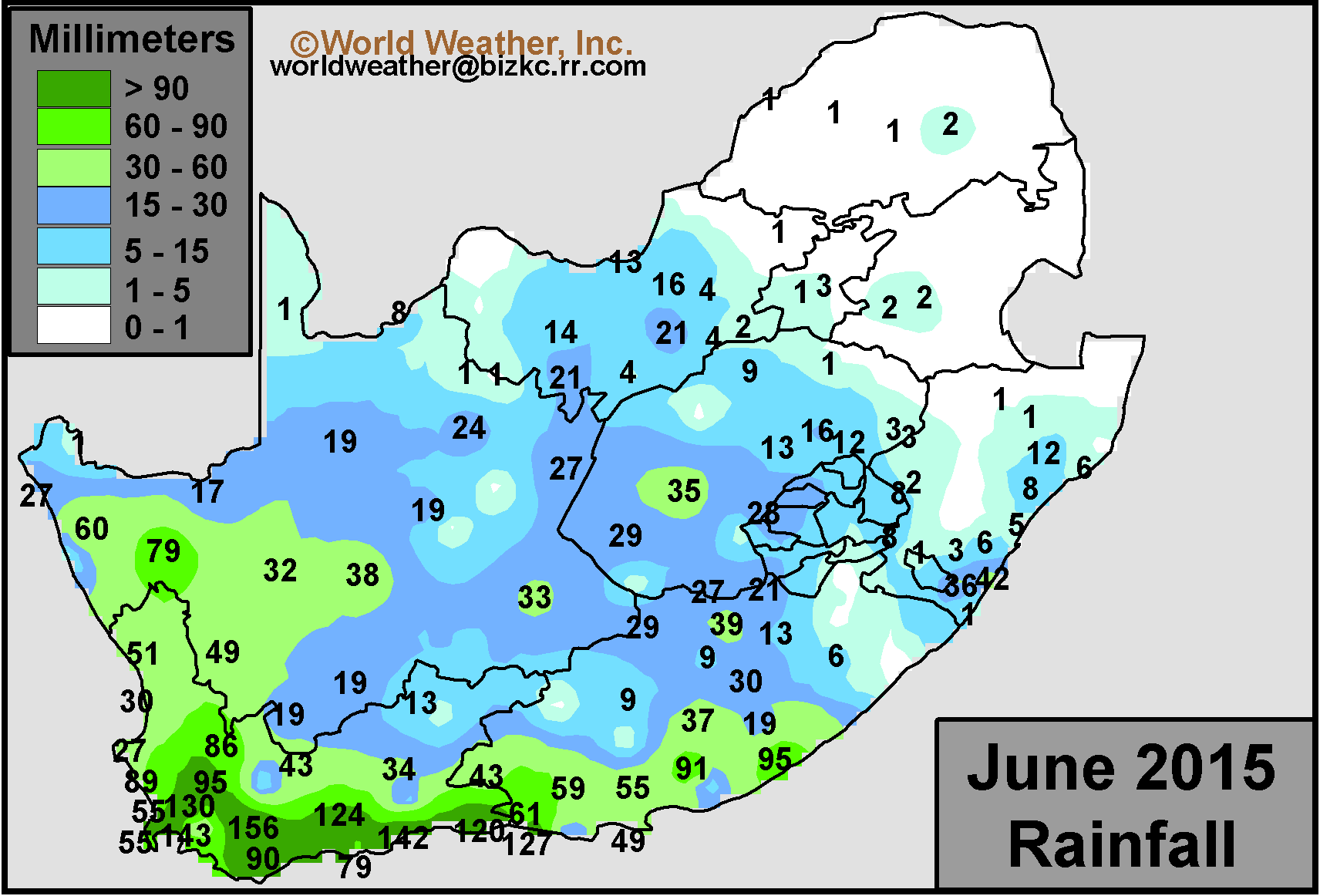
Kansas City, July 1 (World Weather Inc.) – June brought much improved rainfall to western and some central grain production areas in South Africa. The precipitation was welcome and bolstered soil moisture for improved wheat planting and establishment. Eastern portions of the nation continued to miss out on significant rain and even though some areas in Free State and North West received greater than usual rainfall, the soil is still low on moisture leaving winter crops not very well established. Greater rain is still needed throughout the nation’s production region, but especially in eastern areas. 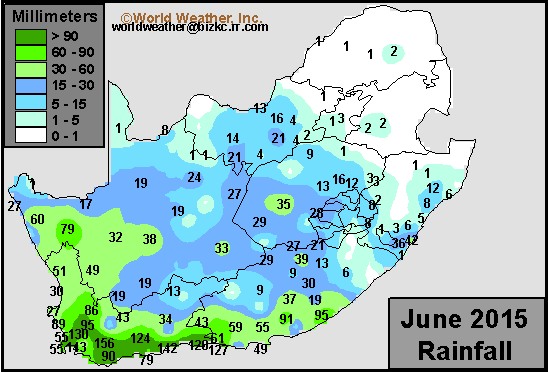 Western Cape produces 38% of the nation’s wheat and precipitation during the past month was significant enough to induce much improved planting and emergence conditions relative to last year when rain rarely fell during the month of June. This year’s rainfall varied from 2.00 to more than 3.50 inches most often with local totals as great as 6.00 inches in the south. The precipitation in Western Cape was near to above average. Northern Cape only produces about 14% of the nation’s total wheat, but the province did exceptionally well with precipitation during June with totals varying from 0.50 to 1.50 inches in many areas. A few locations in the east-central part of the state were left dry while amounts approaching 2.00 inches occurred in west-central production areas. Again, the rain was well above average and the two states produce a combined 52% of the nation’s wheat production which immediately suggests a much better potential production year than last year. Last year South Africa had its worst wheat production year since 1933 resulting from reduced acreage and drought. This year will be different, although eastern portions of the nation have still not received enough rain to seriously improve planting moisture.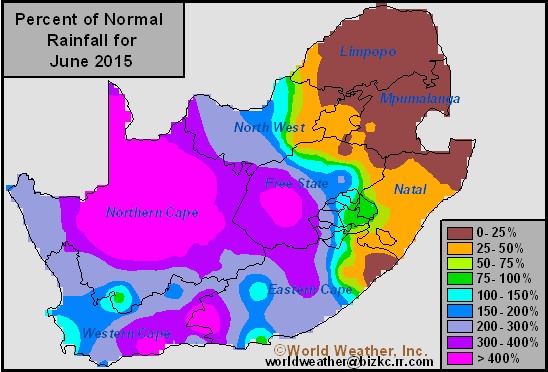
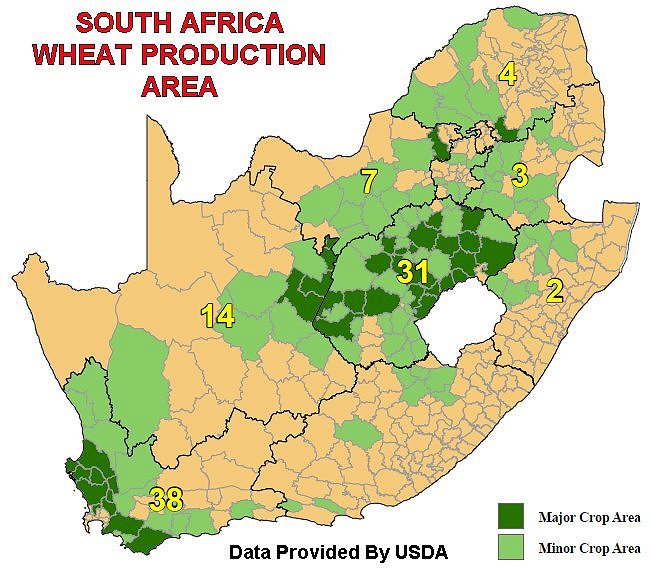 Some important wheat production areas in eastern Free State and minor production areas in Mpumalanga and Limpopo have not had much significant moisture so far this planting season and fieldwork has not likely advanced very well. Some of these drier areas have received minimal amounts of rain which contrasts greatly from the western production areas where rainfall in June was often two to more than four times normal. Summer crop harvesting should be nearly complete in South Africa. The lack of significant rain in June promoted good maturation and harvest conditions in much of eastern South Africa. Any areas that still need to get corn and other summer crops out of the ground should finish in the next week or two. The main focus for crops in South Africa during the coming weeks will be on winter wheat planting and establishment. Planting normally continues into the beginning of August.
 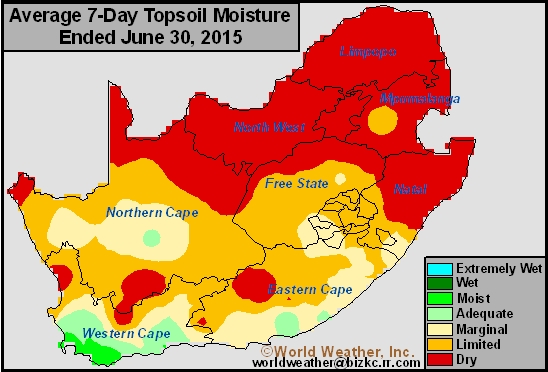 There will be little rain of significance in South Africa through the end of next week. Any rain that falls will be too light to have much impact on topsoil moisture. Temperatures will trend near to above average across the nation, although the warmest conditions will occur outside the main production areas. Planting and general fieldwork will advance favorably across South Africa during the next seven days, but only in areas that have adequate moisture to plant. Western Cape will lose topsoil moisture through evaporation and will likely be trending a little too dry by this time next week. There is still time for improved rainfall in July to promote a good environment for planting and establishment. However, the latest computer weather forecast models are not suggesting that much rain will fall in the driest areas of the east through the first half of the month.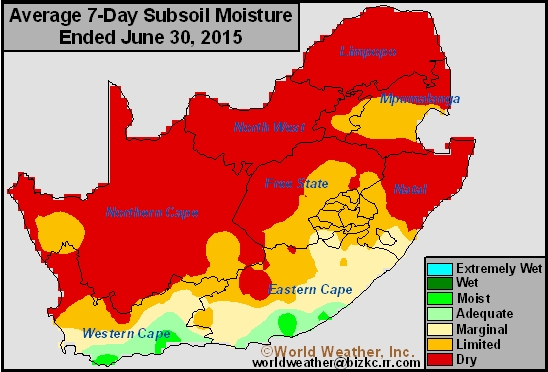
World Weather, Inc. forecasts and comments pertaining to present, past and future weather conditions included in this report constitute the corporation’s judgment as of the date of this report and are subject to change without notice. Comments regarding damage or the impact of weather on agricultural and energy as well as comments made regarding the impact of weather on the commodity and financial markets are the explicit opinions of World Weather, Inc. World Weather, Inc. can not be held responsible for decisions made by users of the Corporation’s information in any business, trade or investment decision. ©2015 World Weather, Inc. Any unauthorized redistribution, duplication or disclosure is prohibited by law and will result in prosecution.